


Margins & Musings: Rest, Lament, and Wisdom of Unchosen Seasons
- Feb 9
- 2 min read
Updated: Feb 10
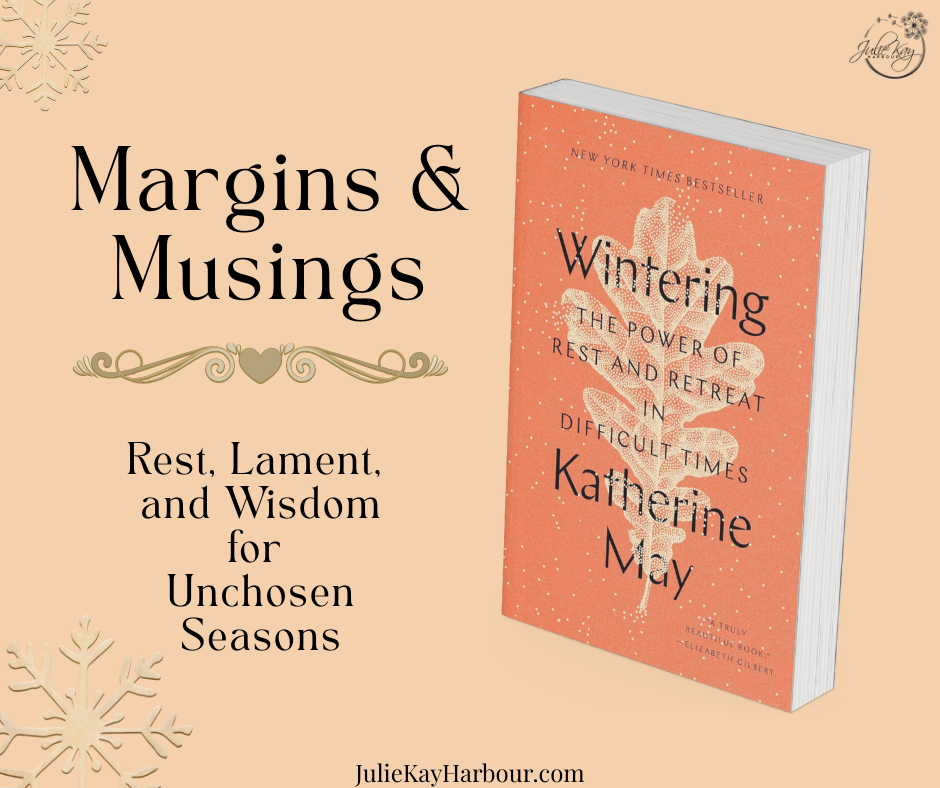
The concept of wintering entered my life through the book Wintering: The Power of Rest and Retreat in Difficult Times by Katherine May. Although it’s not a faith-based book, its subject is something deeply familiar—something we see reflected all around us in God’s creation. Seasons come whether we choose them or not. Life around us slows. What looks lifeless on the surface is often doing its most important work underground.
Throughout the book, May captures this idea beautifully. The author describes wintering not as a season of choice, but one that often arrives uninvited and unexpected. Once you understand it, you can recognize it, and you start seeing it everywhere.
“We have seasons when we flourish and seasons when the leaves fall from us, revealing our bare bones. Given time, they grow again.”
Wintering, she explains, is not failure or weakness—it’s simply part of a natural cycle. Rather than resisting it, she invites us to name it honestly. Naming our true feelings and emotions is a vital component of lament.
“If happiness is a skill, then sadness is, too… That is wintering. It is the active acceptance of sadness.”
Especially in Christian circles, I don’t believe we’re very good at the practice of lament. Admitting sadness runs counter to the expectations we carry every day. We’re encouraged to push through, stay positive, and minimize discomfort—often at the cost of our own well-being.
“If we don’t allow ourselves the fundamental honesty of our own sadness, then we miss an important cue to adapt… I often wonder if these are just normal feelings that become monstrous when they’re denied.”
Wintering asks us to listen to what we feel rather than ignore it. Practice slowness instead of striving. Honor the truth of where we are.
“You cannot rush healing on a schedule that makes others comfortable.”
This kind of slowing down can feel almost rebellious in a culture obsessed with busyness, productivity, and momentum.
“Doing those deeply unfashionable things — slowing down, letting your spare time expand, getting enough sleep, resting — is a radical act now, but it is essential.”
Winter is not wasted time. May reminds us that these quiet seasons carry wisdom—lessons shaped only in stillness and survival.
“Here is another truth about wintering: you’ll find wisdom in your winter, and once it’s over, it’s your responsibility to pass it on.”
I believe my favorite part of her reflection on wintering is that it is no longer something to fear or avoid—but something we learn to recognize and meet with intention.
“I recognized winter. I saw it coming… I greeted it and let it in. I had some tricks up my sleeve, you see. I've learned them the hard way.”
Reading Wintering gave language to a season I had already begun to recognize in my life. It didn’t rush me toward spring—it gave me permission to stay, to rest, and to trust that beneath the surface, necessary growth was taking place.

